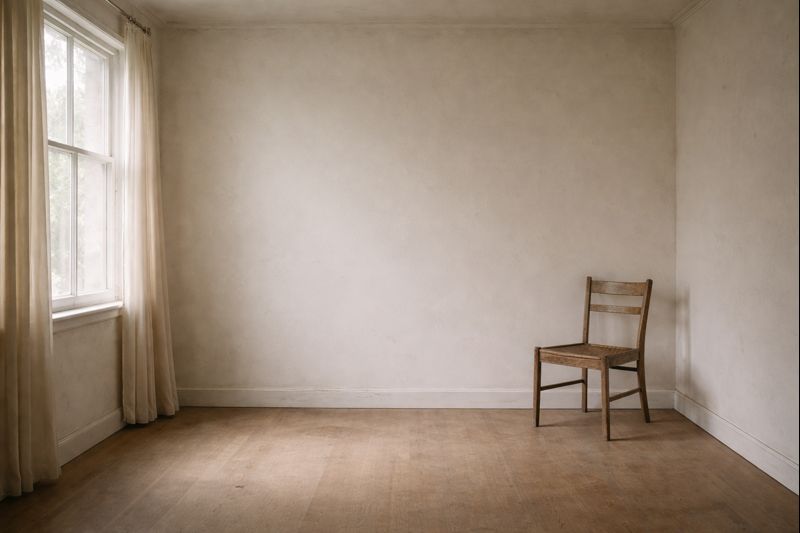
This essay reflects on a single line by Sylvia Plath and what it reveals about identity, adaptation, and the quiet responsibility of being ourselves.
One morning, while scrolling — not with intention, not with a plan — just that familiar habit of looking for something that might spark a thought, I came across a quote someone had shared on LinkedIn. I don’t remember who posted it. I don’t remember the caption. I remember stopping.
The quote said:
“It’s a hell of a responsibility to be yourself. It’s much easier to be somebody else or nobody at all.”
— Sylvia Plath
At first, it felt simple. Almost obvious. One of those lines you read, nod at, maybe even agree with generously, and then move on. Being yourself is hard. Being someone else is easier. Yes. Fine.
I was about to scroll.
And then my mind did what it usually does — the thing that gets me into trouble. It refused to let the thought stay simple. It said, No. This isn’t finished. You’re only seeing the surface.
I hate when it does that.
So I read it again. And again. And slowly, the neat, shareable meaning started to fall apart. The quote stopped sounding motivational. It started sounding heavy. Not inspiring — exposing.
I screenshot it.
That’s usually my sign. When a thought doesn’t want to be consumed and forgotten, it asks to be kept.
At first, I tried to hold it lightly. The easy version. The one where “being yourself” sounds brave and empowering and Instagram-friendly. But the longer it stayed with me, the more uncomfortable it became. Because this line wasn’t about freedom. It was about responsibility — the kind that doesn’t come with applause.
Being yourself isn’t just brave.
It’s inconvenient.
When you’re somebody else, life offers instructions. There’s a script. A tone. A way of behaving that keeps things smooth. You learn quickly what works, what’s acceptable, what gets you nods instead of resistance. It’s not always fake — but it is curated.
And being nobody at all? That has its own safety. Silence doesn’t get questioned much. Invisibility doesn’t provoke. You can move through rooms without friction if you leave enough of yourself behind. Sometimes that feels like relief.
But being yourself removes that shelter.
There’s no role to hide behind when things get awkward. No borrowed language when your words land wrong. If you choose, if you speak, if you stand somewhere honestly — the responsibility is yours. Fully. No mask to blame. No character to retreat into.
That’s when the quote stopped sounding clever and started sounding true.
I found myself thinking about people I’ve known — not as ideas, not as theories — but as real faces. People who didn’t lose themselves dramatically, but gradually. Sensibly. Editing their reactions. Softening their edges. Learning which parts of them were welcome and which parts caused discomfort.
Nobody forced them.
They adapted.
And the world often rewards that. Smooth people move faster. Agreeable people are called mature. Quiet people are often called wise. There’s a subtle praise in disappearing just enough.
So when we say “be yourself,” we rarely mention the cost. That being yourself can mean being misunderstood, misread, sometimes quietly sidelined — not because you’re wrong, but because you don’t fit the rhythm of the room.
Out of habit — and because my mind wouldn’t let this rest — I did look into what others have said about this. Bigger brains. Longer studies. People who put language and data to things many of us only feel. Not to prove anything. Just to see if this discomfort was only mine.
It wasn’t.
Again and again, across cultures and time, the same thing appears: people don’t fall apart because life is hard. They fall apart because they live too long divided. Because who they are inside and how they live outside drift too far apart, and something inside starts to ache without knowing how to explain itself.
That didn’t surprise me. What stayed with me was how easily we stop at the surface of ideas like this — because going deeper asks us to look at our own compromises. And scrolling past is always easier.
Somewhere in the middle of all this thinking, another thought arrived — quietly, without asking permission.
I’ve noticed this for years, long before I could explain it properly. I never liked how early children start learning which parts of them need to be adjusted. I didn’t always know why it bothered me. It was more of a gut feeling than a clear thought.
Children don’t struggle with being themselves.
They struggle with whether it’s allowed.
You can see it early. Very early. The moment a child is told they’re “too much.” Too loud. Too sensitive. Too slow. Too intense. The moment they’re praised not for being curious, but for being compliant. Not for asking questions, but for sitting still.
They learn. Quickly.
They learn which emotions need editing. Which reactions should be swallowed. Which parts of them earn approval and which parts create tension. We call it growing up. We call it learning manners. We rarely call it what it is — practice.
And something in me has always resisted that. Even before I could put words to it. Just a feeling that something vital was being filed down too early, too quietly.
Years later, we’re surprised when adults feel disconnected, unsure, tired in a way rest doesn’t fix. We wonder where confidence went. Where clarity went. Where that sense of self disappeared.
Nothing was lost.
It was just put away carefully, piece by piece.
By the time I came back to that screenshot, the quote no longer felt like something to share casually. It felt like something to sit with. Maybe even argue with.
Being yourself isn’t freeing because it feels good.
It’s freeing because it ends the quiet, exhausting work of pretending.
And yes — it really is a hell of a responsibility.
Not because it’s loud or dramatic,
but because it asks you to stand where you stand, without disguise.
That thought stayed with me longer than I expected.
The ones that do usually mean something.


 English
  Polish
2026-03-08 @ 12:52
It’s wonderful that you are getting thoughts from this article as well as from our dialogue made at this time.