Only Now Do I Understand
New to this memoir?
This is the third chapter of The Childhood We Never Thought to Miss. If you’d like to follow the journey from the beginning, you can read Part 1 here... and Part 2 here...
In Part 3 of The Childhood We Never Thought to Miss, I return to the fields of rye, books read beneath a quilt, little hiding places, and the quiet acts of love that only adulthood helped me understand. This chapter is less about remembering and more about seeing my childhood through different eyes.
As I sit here, my fingers keep moving across the keyboard while my mind seems determined to run somewhere else entirely. The letters on some of these keys have almost disappeared after years of being touched, yet the memories they bring back refuse to fade. If anything, they have become clearer with time. Every story I write seems to wake another that has been waiting patiently somewhere in the background, and before I have finished remembering one afternoon, another is already asking for its turn.
I don’t think childhood ever really leaves us.
It simply waits until life becomes quiet enough for us to hear it again.
The memories that keep returning are rarely the important ones, at least not the ones adults would have considered important at the time. Nobody ever told me, “One day you’ll remember this forever.” Had they done so, I probably wouldn’t have believed them anyway. I was too busy living those days to imagine I would one day miss them.
What keeps returning are the ordinary moments.
The ones that arrived without ceremony and slowly became the foundations of everything that came afterwards.
One of the happiest memories I have begins long before I actually reached the people I was running to.
It began with waiting.
Whenever my parents came to visit my grandparents from the city, I somehow always knew they were coming before anyone had told me. Children, I think, recognize hope long before they learn to tell the time. I never stayed inside the house. I wandered somewhere near the gate, pretending to be busy with something else while listening for the sound of a bus or footsteps on the sandy road.
The moment I caught sight of them, everything else disappeared.
My little legs somehow forgot how to walk.
They only knew how to run.
Looking back, they probably weren’t very fast at all, but in my memory they flew.
The best part wasn’t even reaching my parents.
It was everything that happened on the way.
The path from the gate wasn’t just a path. It was warm sand slipping between my bare toes before giving way to cool grass that tickled the soles of my feet until I burst into laughter for no reason at all. Even when I was running as fast as I could, I somehow still noticed everything around me.
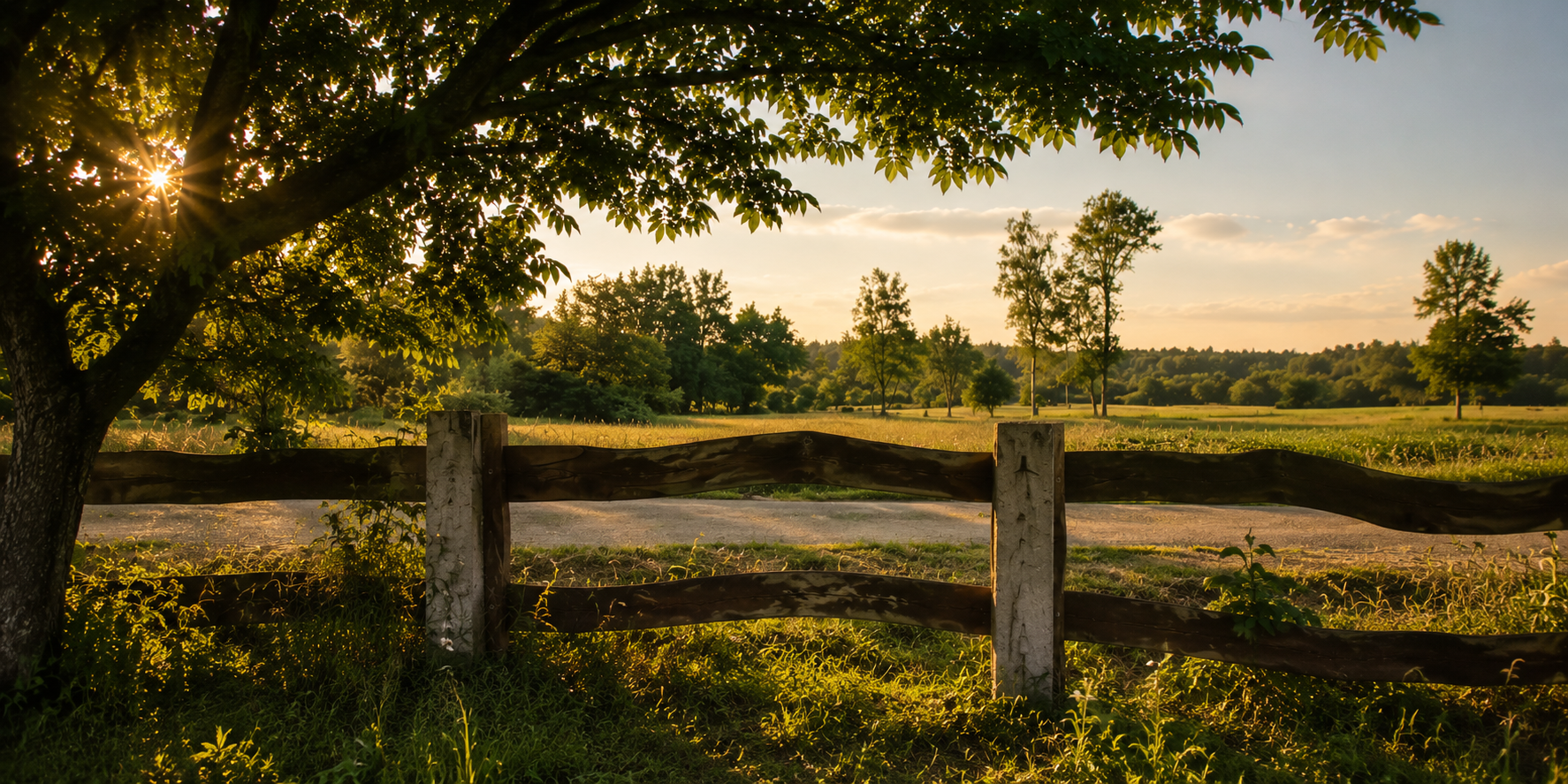
On both sides of the little path stretched an endless sea of golden rye, swaying gently with every breath of the summer wind. To my little eyes, it seemed to go on forever. I ran right through the middle of it with my arms stretched out like wings, trying as hard as I could to reach the tall stalks growing on either side of me. I was simply too small. No matter how much I stretched, my fingertips could never quite touch them. Only now and then, as I ran a little faster, the very tips of my fingers brushed lightly against the slender stalks before they slipped away again. Somehow, that tiny touch made me run even faster, determined that perhaps, just this once, I might finally reach them. Sometimes, instead of running straight ahead, I disappeared into the field. It only took two or three little steps before the rye swallowed me completely. I would sit down right there in the middle of it, convinced I had discovered the perfect hiding place. When I looked up, all I could see was a deep blue sky stretching endlessly above me. Swallows circled so high that they looked no bigger than little brushstrokes drifting across the blue, while the warm wind whispered through the rye all around me. Bees hummed somewhere close by. Grasshoppers leapt out of my way. Even today I struggle to describe that sound because it wasn’t one sound at all. It was hundreds of tiny sounds gently woven together until they became the music of summer itself.
I remember sitting there absolutely convinced that nobody in the world knew where I was.
Well…
Almost nobody.
Our dog always found me.
No matter where I hid, it never took him very long. One moment I was certain I had become invisible, and the next there he was, wagging his tail as though solving my hiding place had been the easiest thing in the world.
What puzzled me much more was my grandfather.
Only a few moments after the dog arrived, Grandpa somehow appeared too.
At the time I never questioned how he managed it. I simply accepted that grandfathers possessed mysterious powers that children didn’t understand.
Today I’m almost certain my faithful four-legged detective gave away every one of my hiding places long before Grandpa arrived.
Poor Grandpa.
While I was happily making little paths through his beautiful field of rye, he saw something completely different. I saw an endless kingdom waiting to be explored. He saw weeks of careful work flattened beneath the feet of one very determined little granddaughter who couldn’t understand why anyone would grow such wonderful hiding places if children weren’t supposed to play in them.
I can still hear him calling my name across the field, trying to sound stern while I stubbornly pretended not to hear him.
At the time I thought he was spoiling my adventure.
Today I smile because I finally understand that he wasn’t protecting the rye nearly as much as he was protecting me.
Eventually I reached my parents.
The hugs always came first.
Everything else could wait.
My parents always arrived carrying more than bags. They brought with them that quiet feeling that everything was exactly as it should be. Only now do I understand that I never questioned whether I was loved. Children rarely do when love surrounds them every day. They simply accept it as naturally as sunshine after rain or the smell of bread coming from the kitchen.
Sometimes there were a few sweets carefully hidden inside a coat pocket or wrapped in a piece of paper at the bottom of a bag. They were never many, but to me they felt like treasure. We never hurried through them. I would look at each one before choosing which to eat first, then let it slowly melt in my mouth, hoping the sweetness would last just a little longer. Looking back, I think we enjoyed the waiting almost as much as the sweets themselves.
If I am completely honest, though, there was always something I hoped they had brought even more than chocolate.
A book.
Even today, after all these years, I still cannot open a new book without first holding it in my hands for a moment. I turn it over, study the cover and, almost without thinking, bring it close enough to breathe in the smell of fresh paper and ink. I think I believed every story had its own scent, and somehow, I wanted to know it before I even read the first sentence.
While my parents sat with my grandparents over tea, catching up on everything that had happened since their last visit, I quietly disappeared into a corner with my newest treasure. I couldn’t tell you what the grown-ups talked about. Their conversations belonged to their world.
Mine had already become another one.
Within a few pages I was no longer sitting in my grandmother’s house. I was following hidden paths through deep forests, crossing old wooden bridges that creaked beneath my feet and meeting people who had never existed anywhere except inside those pages. The walls around me quietly disappeared until there was only the story.
People often say they love reading.
I don’t think that was ever true of me.
I didn’t simply read books.
I ate the stories.
Before my parents had even finished their visit, I had often reached the final page. Then I would wander back into the garden feeling strangely lost because the story had ended while the afternoon was still there. It never took long before I began inventing another one in my own head. Somehow, the characters refused to leave me. They simply carried on living, only now they belonged partly to me.
When evening came and someone finally announced that it was time for bed, I always nodded as though I completely agreed. Inside, however, I already knew that my adventure wasn’t over yet.
I waited.
One by one the voices in the house became quieter. Cups stopped clinking. Doors closed for the last time. Somewhere outside a dog barked once before settling down for the night. Even the old clock on the wall seemed louder in the darkness, patiently counting every minute I was supposed to be asleep.
Only then did I carefully pull the quilt over my head and reach for the little torch hidden beside my pillow.
Suddenly another world appeared.
Outside the blanket everyone believed I was sleeping peacefully.
Inside it I was still travelling.
The air beneath the quilt slowly became warm and heavy, yet I stubbornly stayed there because there was always one more chapter waiting for me. One more mystery that needed solving. One more person I couldn’t possibly leave behind before discovering how their story ended.
Then, just as I thought I had escaped unnoticed once again, the blanket suddenly lifted.
“Oczy popsujesz! Spać i to już!” (“You’ll ruin your eyes! Go to sleep, right now!”)
That was usually the end of the evening.
The torch disappeared.
The book disappeared.
There were no discussions.
No negotiations.
Tomorrow was another day, and tomorrow the story would still be waiting.
Oddly enough, I don’t remember feeling upset.
I remember smiling.
For a little while longer, I had managed to stay inside another world.
Even after the torch had been taken away and darkness filled the room once more, the story continued. I closed my eyes and carried on walking beside the people I had left behind only moments earlier. Sometimes I changed the ending. Sometimes I invented another chapter entirely. Looking back, I think that is what books quietly gave me. They never simply ended when I reached the last page. They carried on growing inside my imagination long after the cover had been closed.
It makes me smile now because, while writing these memories, another picture suddenly walks through the door as though it had been patiently waiting for years.
I can still see myself sitting in a cinema with my classmates, completely absorbed in The NeverEnding Story. I don’t remember trying to understand what it meant. Children rarely analyse the things that move them. They simply allow themselves to believe. I walked out of that cinema convinced that extraordinary worlds really did exist somewhere and that, if I looked carefully enough, I might one day stumble across one myself.
I think that is why the title has stayed with me for so many years.
The NeverEnding Story.
It seems strangely fitting now.
Every time I think I have reached the end of these memories, another one appears, gently takes me by the hand and leads me somewhere I had completely forgotten.
And every single time…
I follow.
For years I thought books had given me the greatest adventures of my childhood.
Then, without ever planning it, my parents built another world for me with nothing more than two ordinary chairs and a couple of blankets.
I don’t think they gave it much thought. They simply stretched the blankets over the chairs, tucked the corners in here and there, and carried on with whatever they had been doing. To anyone else, it was just a little shelter to keep one little girl occupied for a while.
To me, it was a proper house.
The moment I crawled inside, everything changed. The daylight filtering through the blankets became soft and warm, and somehow that tiny space felt much bigger than it really was. Every cushion found its place. One became my bed, another a chair, another a little table where my dolls and I held the most important conversations imaginable. I rearranged everything almost every day because every day my little house became something different. Sometimes it was a family home. Sometimes a castle. Sometimes a little school where I was always the teacher. Looking back now, I don’t remember ever wishing it had been bigger. It was already perfect because it belonged entirely to me.
My grandfather built me another little house in the village.
This one wasn’t made of blankets anymore.
It stood outside, built from wood by hands that knew exactly how to make things that lasted. To anyone passing by, it probably looked like a simple little hut. To me, it felt as though my grandfather had built me my own little kingdom.
My friends and I disappeared inside it for hours. We whispered our greatest secrets there, speaking so softly because we were absolutely convinced that nobody outside could hear us. Looking back, I smile because I’m almost certain every grown-up nearby knew perfectly well what we were talking about. Somehow, they never spoiled our illusion. They never laughed or called out that they could hear every word. They simply let us believe that little world belonged only to us.
I often think about that now.
How easily adults could have interrupted our games.
How easily they could have reminded us that it was only a little wooden hut.
Instead, they quietly allowed us to live inside our imagination.
We planned adventures there that never happened, solved mysteries that never existed and made promises we had completely forgotten by the following week. Yet at the time every one of them felt terribly important. Childhood has a wonderful way of making ordinary afternoons feel as though the whole world depends on them.
Time behaved differently then.
Nobody looked at a watch.
Nobody announced that we had twenty more minutes before moving on to something else.
The afternoon simply unfolded all by itself. We stayed outside until somebody called us home or until the evening slowly arrived without asking anyone’s permission. Looking back now, I sometimes wonder if that is why those days felt so endless. Nothing hurried them along.
When I close my eyes today, I don’t remember the blankets themselves or even the wooden walls my grandfather built.
I remember how those little places made me feel.
Safe.
Not because I ever stopped to think about being safe.
Simply because I never had to.
Only now do I realize that I grew up with the quiet certainty that someone was always looking out for me. I never questioned it. I never even noticed it. It was there in ways so small that they escaped me completely at the time.
I still remember the little cushion tied onto the bicycle carrier before we went anywhere. To me, it had always been there. I never stopped to wonder who had put it there or why. I simply climbed onto it, happy that my little legs could dangle freely while the world rolled past in front of my eyes. It has only occurred to me years later that somebody had looked at that hard metal seat, imagined how uncomfortable it must have be for a little girl, and quietly decided to make the journey softer before I had even thought of complaining.
The same thing happened whenever I was lifted onto a wagon piled high with freshly cut hay. I felt as though I was sitting on top of the whole world. The smell of summer surrounded me, the hay scratched my bare legs, and every little bump in the road made me laugh. I was far too busy enjoying the ride to notice the strong hands that never stopped making sure I couldn’t fall.
Children rarely notice the hands that are keeping them safe.
They simply trust the world.
Only much later do they discover that, all along, it wasn’t the world that had been holding them.
It was love.
I don’t think I understood that word the way I do today.
As children, we don’t stop to analyze the people who love us. We don’t spend our afternoons wondering whether we are safe or whether somebody is quietly making sacrifices on our behalf. We simply assume the world has always been that way.
Only many years later do we begin to notice the little things.
The things that never asked to be noticed.
One of my favorite places on the farm was the cowshed.
I know that probably sounds rather unusual to anyone who didn’t grow up surrounded by fields and animals, but to me it was one of the most fascinating places imaginable. I could spend ages sitting there watching the cows chewing slowly, listening to the gentle clinking of their chains and breathing in that unmistakable smell of hay, straw and warm animals. High above them, tucked into every beam beneath the roof, were countless sparrows’ nests. It seemed as though the whole cowshed belonged to them just as much as it belonged to the cows. Every now and then one of the parents would swoop in carrying food, and suddenly tiny heads appeared above the nests, little yellow beaks stretched as wide as they could go, all chirping at once, each convinced it would be the first to be fed. I watched them for what felt like hours, completely fascinated. To this day I couldn’t tell you why I loved that place so much. The greatest miracle of all was when a calf was born.
I remember sitting as quietly as I possibly could, watching this tiny little creature trying to find its legs for the very first time. It seemed almost impossible that something could be alive only moments after entering the world. I wanted to touch it, stroke its soft head and stay beside it for as long as it would let me.
Time disappeared.
The whole world disappeared.
There was only me and that little calf.
Which usually meant one thing.
Nobody could find me.
I can still hear voices calling my name somewhere outside while I sat completely convinced that I had chosen the best hiding place in the whole village. Then, all at once, somebody would appear in the doorway.
Relief always arrived before the scolding.
“Jak chcesz iść, to mów, bo co by było, jakby cię krowa ubodła?” (“If you want to go somewhere, tell us. What if the cow had gored you?”)
As a little girl, I only heard the raised voice.
I thought they were cross because I had wandered off again.
Today I hear something entirely different.
I hear fear.
Not fear for themselves.
Fear that something might have happened to me.
How strange it is that the very same words can mean completely different things depending on how old we are when we hear them.
There was another sentence that every Polish child of my generation seemed to know.
“Wejdź na płot! Jak spadniesz, to dam ci klapsa.” (“Climb onto the fence! If you fall, I’ll give you a smack.”)
I smile every time I remember it because, taken literally, it makes absolutely no sense. If I had already fallen, what possible purpose would another smack have served?
As children, we never questioned it.
As adults, we finally understand what our parents and grandparents were really trying to say.
“Please don’t do anything dangerous.”
“Please don’t frighten us.”
“Please come home safely.”
Their love didn’t always arrive wrapped in gentle words.
Sometimes it came dressed as worry.
Sometimes as a raised voice.
Sometimes as a warning that sounded much harsher than it was ever meant to be.
My grandmother had her own way of speaking that language.
I can still see her standing in the garden, one hand on her hip, the other holding the stick she always seemed to reach for whenever I had stayed out far longer than I was supposed to.
The moment I spotted her, I already knew two things.
First, I was in trouble.
Second…
I was going to run.
I never won.
Grandmothers, at least Polish grandmothers, have a remarkable ability to catch grandchildren who believe they are much faster than they really are.
I remember crying.
I remember protesting.
I remember being absolutely convinced that life could not possibly be more unfair.
At that age I saw only the stick.
I never saw what had happened before it.
I never saw a grandmother standing by the gate, looking up the road again and again, wondering where her granddaughter had disappeared to.
I never saw the worry that had slowly been growing inside her with every passing minute.
Children rarely do.
They arrive home convinced the story began the moment they walked through the gate.
Only years later do they realize that somebody else’s story had begun much earlier.
Today, when I think about my grandmother running after me with that stick, I no longer laugh because I escaped for another few seconds.
I smile because I finally understand what she never knew how to say.
She wasn’t running after me because she wanted to hit me.
She was running because she loved me more than I could possibly understand at the time.
Funny how life changes the meaning of memories.
The memories themselves stay exactly the same.
Only our hearts grow old enough to read them differently.
As I write these pages, I find myself smiling more often than I expected. Not because every memory is happy. Some of them still carry the sting they carried all those years ago. Others still make me laugh out loud. Some leave me sitting quietly for a while before I can continue writing. What surprises me most is that none of them have returned to ask me to change the past. They have returned because they have finally found someone ready to understand them.
When I was a little girl, I thought my grandmother was chasing me because she was angry. I thought my grandfather cared more about his field of rye than about the little paths my feet happily made through it. I thought my parents simply arrived with sweets, books and smiles, never once wondering what had happened before they reached my hands. I never imagined the hours they had spent standing patiently in queues so that one paper bag could carry a few oranges home, or how carefully they chose a book because they already knew stories would become my favorite place to hide.
Children see only the last part of every story.
They see the book.
They do not see the journey it made before it reached them.
They sit comfortably on the little cushion tied to the bicycle carrier without ever wondering who thought to put it there. They laugh from the top of a wagon full of fresh hay without noticing the hands that never stop holding them steady. They run barefoot through fields believing the whole world is theirs because they have never had a reason to think otherwise.
And perhaps that is exactly how childhood should be.
Looking back now, I realise that what I remember most is not what I owned or where I lived. It is the extraordinary feeling of being completely safe without ever knowing I was safe. I simply believed that if I wandered a little too far, someone would come looking for me. If I fell asleep in the middle of another story, tomorrow would still be waiting for me. If I disappeared into a field of rye or lost myself watching a newborn calf take its first steps, there would always be voices calling my name until they found me.
I carried that certainty so naturally that I never noticed it was there.
Only now do I understand that it became the quiet foundation beneath everything that came afterwards. It shaped the way I love, the way I teach, the way I listen to children and, perhaps most of all, the way I still believe that imagination is never a waste of time. Someone once made space for mine to grow without hurrying it, laughing at it or telling me to become sensible too soon. That was one of the greatest gifts I have ever received, although I didn’t recognize it until many years later.
When I first sat down to write about my childhood, I honestly believed I was opening a door that had been closed for a very long time. Instead, I discovered that the door had never been locked at all. It had been standing quietly open, waiting for me to come back whenever I was ready.
Now I understand why these memories refuse to let me stop writing.
They are not asking me to remember them.
They are gently introducing me, once again, to the little girl who became the woman writing these words today.
And I have a feeling she still has a few more stories she would like to tell.
( to be Continue…)

 English
  Polish