Children Think With Their Bodies Before They Think With Words
Embodied learning early childhood describes how children understand sounds, numbers, and words through movement and hands-on experience.
I did not arrive at this understanding through theory or training. It grew slowly from daily work with young children and from noticing when learning stayed and when it slipped away. I was trying to help children remember sounds, numbers, shapes, and words, and again and again I saw that learning settled more deeply when their bodies were involved.
It began with clapping sounds. When we clapped syllables together, children remembered them more easily. The sounds no longer floated; they landed. So we added snapping, then hopping. Without consciously naming it, I was joining early phonics with syllable awareness through rhythm and movement. The children enjoyed it, but more importantly, they recalled the sounds later with confidence. What looked like play was memory being built through the body.
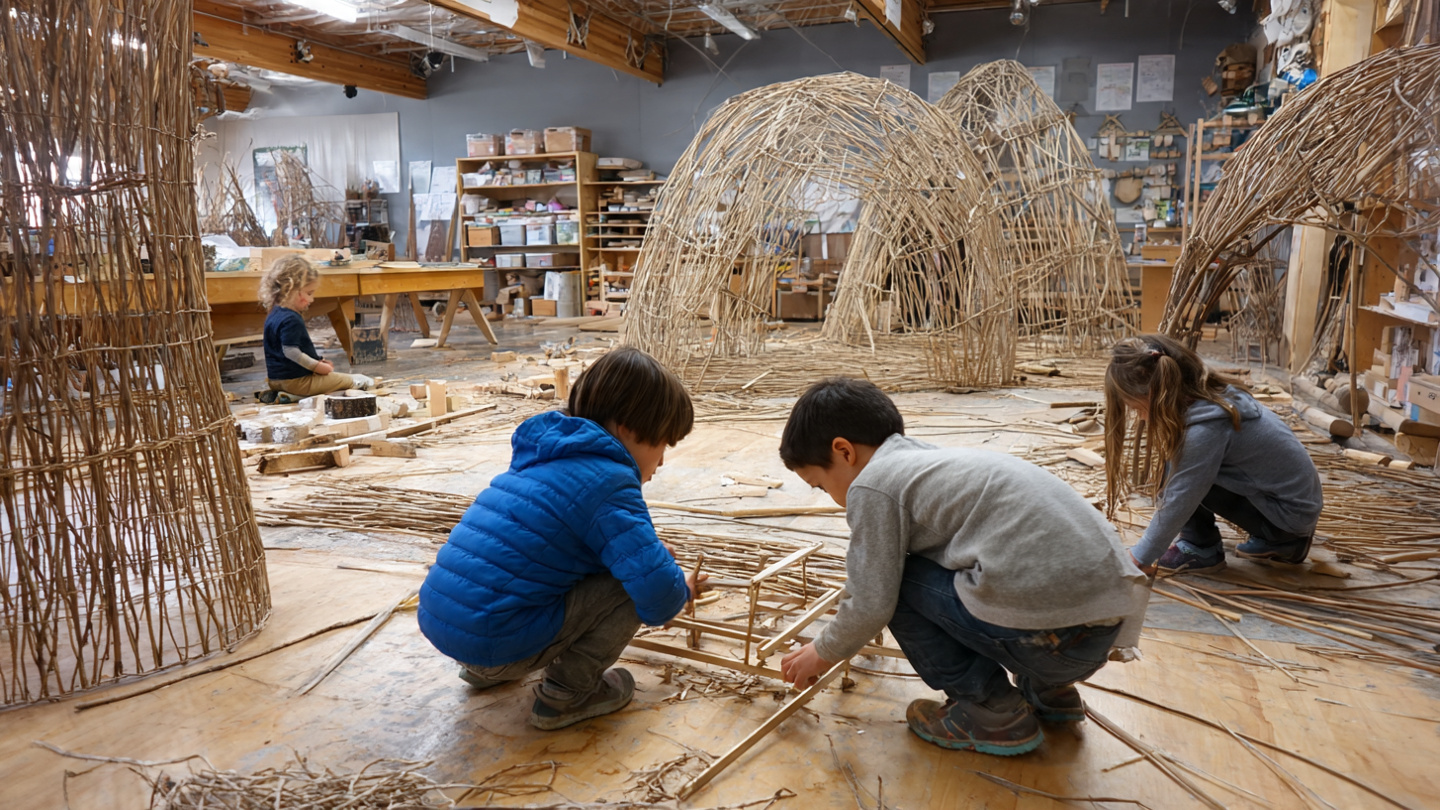
As their confidence grew, the learning itself began to move. Phonics did not stay at the table. We used the gymnasium as a learning space, not as a break from learning. Children moved through obstacle courses, climbed over large LEGO walls, crawled, balanced, and stopped at different points to recall letter sounds, blend them, and create simple CVC words before continuing. The movement required coordination and attention, yet the children were calmer and more focused than when they were seated. Children who struggled to recall sounds while sitting could retrieve them while moving. Their bodies seemed to support thinking rather than interrupt it.
When Learning Became Physical in Early Childhood
This understanding naturally extended into early mathematics. We used initial sounds as a way to collect data and build bar graphs. Children went on a hunt, identifying pictures and objects by their initial sounds, and then worked in groups to assemble a giant bar graph on the floor. Each bar had a colour, and the graph was built piece by piece. Tables and chairs were pushed aside to make space. Children counted, compared, adjusted, and counted again. The graph was not something they looked at; it was something they constructed with their bodies.
Non-standard measurement became part of daily exploration. Children measured using books, blocks, shoes, and sometimes each other. Often, they measured me. That part was taken very seriously and always remembered. Length, height, and comparison became meaningful because they were experienced, not explained.
Some of the most powerful learning moments were simple. In a blind game, one child wrote a letter, number, or shape on a friend’s back, and the other child guessed what it was. This required attention, memory, touch, and trust. It was playful, but deeply focused. Children learned forms through sensation, not only through sight.
Writing moved beyond paper. Children wrote on me with chalk. They discovered which surfaces held chalk and which did not. Walls, floors, rough textures, smooth ones. The environment became part of literacy. Writing was no longer limited to notebooks; it existed in space and movement.
Children as the Designers of Embodied Learning
We created a train using the children themselves. One child was the engine. The rest had to find their place based on the initial sound of a picture. If the picture was umbrella, the child with the letter U had to find the correct place and sit there. The train changed forms many times. The children suggested new rules, modified the game, and created variations. They became the designers, not just the participants.
Exploring heavy and light became a full-day investigation. Children lifted objects, compared them, tested again, and discussed their observations. Chairs, tables, books, feathers, all became part of learning. I often became the heaviest object to lift, which mattered greatly to them. This exploration moved naturally into sorting, categorising living and non-living things, counting, grouping materials, and later creating words by mixing initial sounds.
Rainy days were never a reason to stop learning. Rain always had a purpose. We went out to observe, feel, compare, and return with wet shoes and full conversations. Learning adjusted to the environment rather than stopping because of it.
Writing followed experience. Children used brushes and paint on floors and tables. We cleaned together afterward. Writing became the final step of something already lived, not the starting demand.
Not everyone understood this way of learning. I often had to explain it to parents, colleagues, and management. I was told no many times. The gym was for physical education, not for learning. Children needed to sit and write in books. Some days were difficult. So I did what many teachers quietly do. I found ways. I brought learning into spaces where it was not always welcomed. And despite the resistance, children progressed. Parents noticed. There was less stress, less forcing, and more confidence.
Some teachers were curious and wanted to learn. Others preferred familiar routines of tables and chairs. Management changed over time. Some supported non-traditional practices. Some became stricter. I adapted where I could and continued to do as much as possible to keep learning human.
Over time, one truth became clear. Children do not learn separately from their bodies. Their movement, balance, hands, and senses are not distractions from learning. They are the foundation. When we ask children to sit still in order to learn, we often remove the very system that helps learning stay.
I did not change the children. I changed the conditions around them. When the whole body was allowed to participate, learning became calmer, deeper, and more lasting. This is not a method I designed. It is an understanding that emerged from practice. Children think with their bodies long before they think with words, and when we respect that, learning becomes more human.



 English
  Polish
2026-01-02 @ 15:41
Nice article. Yes, I think that exploring objects, places reading stories, doing a show and tell of your most priced toy teaches a lot to the kid and kids around them. It exposes kids to new things develops in them the habit of critical thinking which we adults talk about so much. Makes them inquisitive which is the first step in a learner.