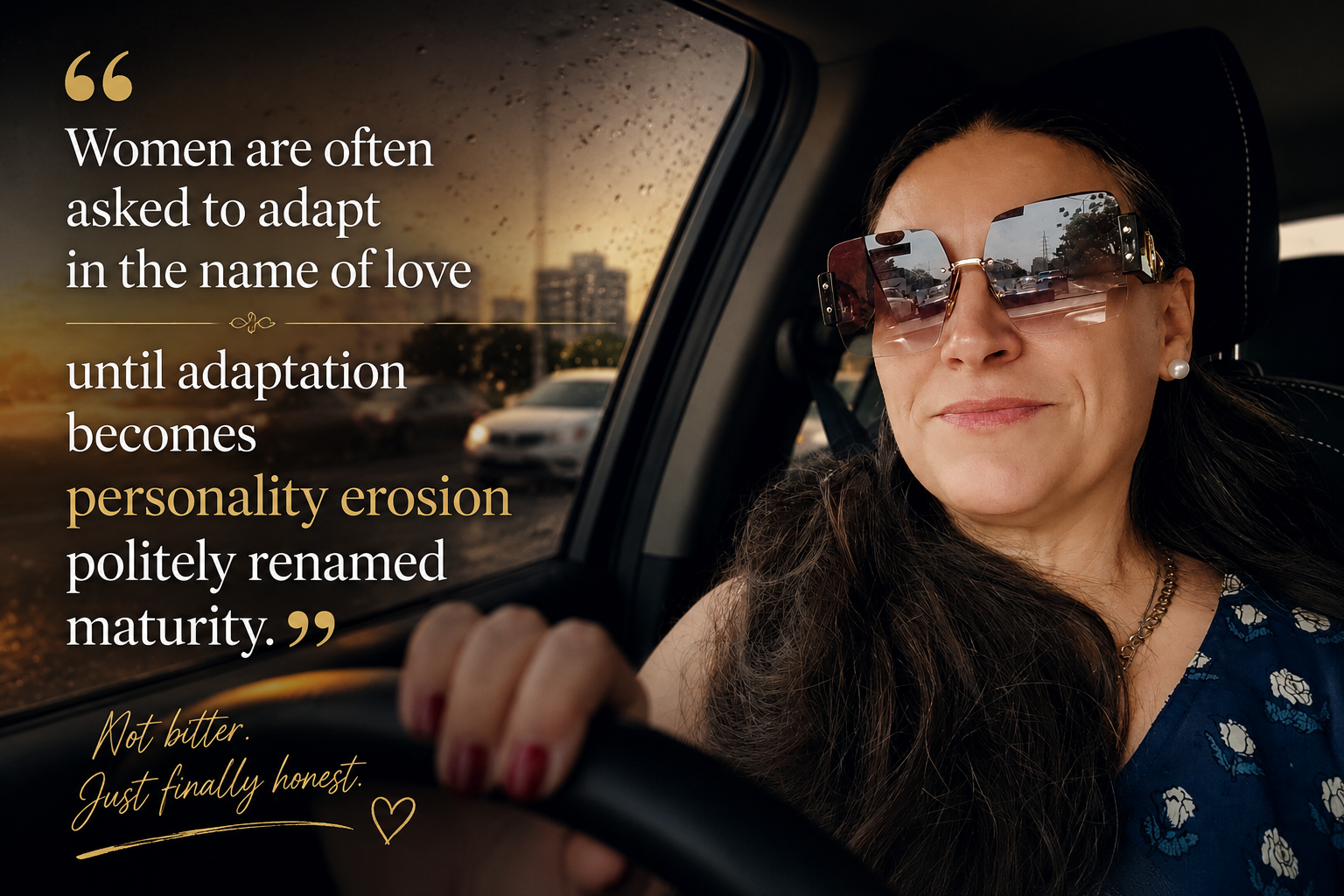
Szczera refleksja na temat międzykulturowego małżeństwa, emocjonalnej samotności, tożsamości, adaptacji i cichych sposobów, w jakie ludzie mogą powoli znikać w długich związkach, podczas gdy wszystko nadal wydaje się “w porządku”.”
Ten artykuł bada miłość, pracę emocjonalną, różnice kulturowe i moment, w którym kobieta w końcu staje się wystarczająco cicha, aby znów wyraźnie usłyszeć siebie.
Powinien istnieć niemal cały salon zarezerwowany dla zagranicznych kobiet poślubiających indyjskich mężczyzn. Delikatnie oświetlony pokój wypełniony herbatą, emocjonalnym zamieszaniem i zdaniem: “Nie, nie, wszystko jest w porządku”, powtarzane przez kobiety, których oczy sugerują co innego.
Nie dlatego, że hinduscy mężczyźni są okropni. Życie rzadko jest takie proste, a istoty ludzkie tym bardziej.
I na pewno nie dlatego, że Polki to niewinne istoty, które przez małżeństwo unoszą się w białej pościeli i emocjonalnej mądrości. Potrafimy być ostre, niespokojne, dramatyczne, niecierpliwe, zbyt szczere dla wygody, a czasami emocjonalnie teatralne przed śniadaniem.
Nie. Problem leży gdzie indziej.
Żyje w cichej odległości między dwojgiem ludzi, którzy szczerze się kochają, ale wychowali się w zupełnie innych cywilizacjach emocjonalnych.
Nie piszę tego jako ekspert. Czasami sam niewiele rozumiem. Przez większość dni nie mam nawet odpowiednich słów na to, co czuję. Po prostu czuję to gdzieś w ciele, jak list bez odpowiedzi.
I może właśnie dlatego podejrzewam, że wiele kobiet natychmiast zrozumie ten artykuł.
Ponieważ istnieje szczególne wyczerpanie, które pojawia się w małżeństwach międzykulturowych po upływie wystarczającej liczby lat. Nie dramatyczne wyczerpanie. Nie filmowa tragedia. Coś spokojniejszego. Bardziej eleganckiego. Bardziej niebezpiecznego.
Wyczerpanie ciągłym tłumaczeniem swojego wewnętrznego świata.
Nikt nie ostrzega, że w niektórych międzykulturowych małżeństwach obcokrajowiec powoli staje się terapeutą relacji, tłumaczem kulturowym, regulatorem emocjonalnym, adapterem społecznym i publicznym dyplomatą jednocześnie - wciąż będąc nazywanym “zbyt emocjonalnym”, bo w końcu załamuje się pod ciężarem tego.
Zaczynasz małżeństwo wierząc, że język będzie wyzwaniem. W rzeczywistości język jest najłatwiejszą częścią.
Prawdziwa trudność zaczyna się później, gdy dwoje ludzi nagle odkrywa, że odziedziczyli zupełnie inne rozumienie bliskości, rodziny, milczenia, obowiązku, przeprosin, niezależności, małżeństwa i samej miłości.
Polka mówi, że czuje się samotna emocjonalnie. Dokładnie to ma na myśli.
Indianin często słyszy oskarżenie ukryte w zdaniu. Porażka. Presja. Krytyka.
Ona prosi o emocjonalną obecność. On odpowiada odpowiedzialnością.
Ona pragnie rozmowy. On oferuje rozwiązania.
Chce, aby prawda była przekazywana bezpośrednio do pokoju. On chce, aby w pokoju panował spokój.
I tak obie osoby powoli zaczynają się mijać, stojąc zaledwie kilka stóp od siebie.
Kobieta staje się “zbyt emocjonalna”.”
Mężczyzna staje się “emocjonalnie niedostępny”.”
Obaj czują się niewidoczni.
Oboje czują się niezrozumiani.
Obaj po cichu zaczynają się bronić, zamiast spotkać się ze sobą.
A małżeństwo wciąż trwa.
Jest to część, której nikt nie wyjaśnił wystarczająco szczerze.
Małżeństwa te często przetrwały nie dlatego, że są głęboko spełnione, ale dlatego, że nie są też całkowicie rozbite.
Tam jest miłość. Prawdziwa miłość. Wspólna historia. Być może dzieci. Lojalność. Przyjaźń. Nawyki budowane przez lata. Drobne uprzejmości. Znajomość. Troska. Czasem nawet czułość ukryta pod zmęczeniem i nieporozumieniami.
To właśnie sprawia, że odejście jest tak trudne.
Ludzie wyobrażają sobie nieszczęśliwe małżeństwa jako ciągłe burze. W rzeczywistości wiele małżeństw umiera powoli przy łagodnej pogodzie.
Są takie małżeństwa, w których nikt nie krzyczy, nikt nie zdradza, nikt nie odchodzi… a mimo to kobieta czuje, jak znika cząsteczka po cząsteczce w codziennej grzeczności.
Czasami samotność nie pojawia się podczas burzliwych kłótni. Czasami pojawia się, gdy siedzi się obok tego samego mężczyzny już siódmy wieczór z rzędu w milczeniu, oboje przeglądając swoje telefony, oboje wyczerpani, oboje porządni ludzie, oboje myślami gdzieś zupełnie indziej.
Kiedy przyglądam się dzisiejszym związkom, też nie czuję się zbytnio zachęcony. Ludzie bez końca mówią o komunikacji, a przy tym prawie w ogóle się nie słuchają. Każdy domaga się zrozumienia, a sam jest już gotowy do obrony. Wrażliwość stała się przedstawieniem w mediach społecznościowych. Intymność stała się przedmiotem negocjacji. Zdolność do skupienia uwagi całkowicie zanikła.
Więc nie, to nie jest artykuł, w którym jedna kultura jest uznawana za lepszą od drugiej. Europejskie małżeństwa też rozpadają się w piękny sposób. Po prostu niszczymy związki na różne sposoby.
Jest jednak coś wyjątkowo samotnego w byciu obcokrajowcem w kulturze, w której sposób wyrażania emocji między mężczyznami a kobietami często różni się od tego, co znałaś wcześniej.
Wielu indyjskich mężczyzn wychowywano w atmosferze ogromnej presji, która cicho spoczywała na ich barkach na długo przed osiągnięciem dorosłości. Odpowiedzialność finansowa. Obowiązki rodzinne. Oczekiwania społeczne. Powściągliwość emocjonalna. Stabilność przedkładana nad wyrażanie siebie.
Następnie poślubiają kobiety wychowane w przekonaniu, że partnerstwo obejmuje emocjonalną otwartość, intymność werbalną, wzajemną obecność psychiczną oraz bezpośrednie stawianie czoła problemom, zanim staną się one emocjonalnymi skamielinami.
Oczywiście obie strony się męczą.
Czasami wydaje mi się, że zagraniczne kobiety w Indiach stopniowo stają się dyplomatkami emocji, nawet nie zdając sobie z tego sprawy. Uczymy się wyczucia czasu. Tonu. Które prawdy są akceptowalne. Które emocje wywołują milczenie. Które rozmowy muszą poczekać. Która szczerość brzmi zbyt ostro w obcej kulturze.
Od kobiet często wymaga się, by dostosowywały się w imię miłości, aż to dostosowanie przeradza się w erozję osobowości, którą grzecznie nazywa się dojrzałością.
Czasami nawet nie wiem, czy tęsknię za Polską, za dawną miłością, za poczuciem bezpieczeństwa emocjonalnego, czy po prostu za tą wersją siebie, która kiedyś mówiła bez zastanawiania się nad konsekwencjami.
Jest w tym też coś dziwnie smutnego – uświadomienie sobie, że po tylu latach spędzonych za granicą nikt z twojego otoczenia nie pamięta już do końca, kim byłeś, zanim przystosowanie się stało się kwestią przetrwania.
Nawet teraz, mimo że otwieram się przed innymi bardziej szczerze, te głosy nie ucichły całkowicie.
“Najpierw to zmierz.”
“Zastanów się dobrze.”
“Złagodź wyrok”.”
“Nie przesadzaj z emocjami”.”
“Za bardzo wprost”.”
“Za bardzo mi niewygodnie”.”
A potem od czasu do czasu coś w środku odpowiada:
Nie.
Nie ze złością. Nie w dramatyczny sposób. Po prostu szczerze.
Nie. Chcę znów w pełni żyć własnym życiem.
Oczywiście są też związki, które rozwijają się pięknie. Głęboko. Szczerze. Uogólniam tutaj, a życie jest zawsze bardziej złożone, niż można to ująć w jakimkolwiek artykule. Niektóre pary naprawdę rozwijają się razem dzięki różnicom kulturowym, zamiast powoli znikać w ich cieniu.
Ten etap też nie nadchodzi od razu.
Kiedy byłam młodsza, wiele spraw wydawało mi się łatwiejszych. Być może ignorowałam pewne rzeczy. Być może po prostu jeszcze ich nie dostrzegałam. Życie toczyło się w szybkim tempie. Były dzieci, praca, walka o przetrwanie, sprawy praktyczne, zgiełk, ambicje, obowiązki, codzienna rutyna. Małżeństwo stało się po prostu częścią mechanizmu życia.
I tak, pieniądze pomagają. Każdy, kto udaje, że jest inaczej, trochę kłamie.
Pieniądze potrafią zaskakująco długo zagłuszać wiele rozłamów. Wygodne życie sprawia, że ludzie są zajęci. Rozrywką. Odwróceniem uwagi. Są wakacje, szkoła, kolacje, harmonogramy, zakupy, osiągnięcia, kręgi towarzyskie, cele. Życie toczy się dalej na tyle długo, by odłożyć na później głębsze pytania.
Wiem to, bo sam przez to przeszedłem.
Ale w końcu coś się zmienia.
I nie sądzę, żeby chodziło tu wyłącznie o “kryzys wieku średniego”, jak ludzie tak chętnie to bagatelizują. To wyjaśnienie wydaje mi się zbyt powierzchowne w stosunku do tego, co faktycznie się dzieje.
Myślę, że w życiu przychodzi taki moment, kiedy po raz pierwszy od lat w końcu się wyciszamy na tyle, by znów wyraźnie usłyszeć własny głos.
Dzieci dorastają. Chaos nieco się uspokaja. Ciągła walka o przetrwanie staje się mniej intensywna. I nagle pojawia się więcej przestrzeni, by po prostu obserwować własne życie, zamiast tylko nim zarządzać.
Właśnie wtedy niektóre prawdy stają się czymś, czego nie da się już nie dostrzec.
Nie dlatego, że nagle się pojawiły, ale dlatego, że w końcu osiągnąłeś wystarczający spokój, by je dostrzec.
A gdzieś w głębi duszy zaczyna szeptać głos:
“Dość tego. Nadal tu jestem. Pozwól mi znów żyć”.”
Na początku głos jest cichy.
Ucisz to. Negocjuj z tym. Zracjonalizuj to.
Mówisz sobie, żeby być wdzięcznym. Dojrzałym. Realistycznym. Cierpliwym.
Każdą myśl starannie rozważasz, zanim wypowiesz ją na głos.
Jednym z najbardziej przygnębiających odkryć w małżeństwie jest uświadomienie sobie, że choć przez lata uczyłeś się komunikacji, regulacji emocji, kompromisu, autorefleksji i świadomości psychologicznej… to sam związek nadal zależy bardziej od twojej dojrzałości niż od wspólnego wysiłku obojga partnerów.
A potem od czasu do czasu coś w tobie odpowiada:
Do diabła z tym. Powiem szczerze.
Najbardziej przerażające jest jednak to, że gdy ten wewnętrzny głos już w pełni się obudzi, rzadko kiedy znów zapada w sen.
Na początku otwierasz drzwi tylko odrobinę. Wystarczająco, by móc oddychać. Wystarczająco, by poczuć, że żyjesz, nie niszcząc przy tym wszystkiego wokół siebie.
Ale wtedy ta część ciebie, którą porzuciłeś na lata, zaczyna coraz mocniej naciskać na drzwi.
I w końcu coś wymyka się spod kontroli.
Nie da się już zapomnieć tego, co teraz wiesz o sobie.
Nie da się już zapomnieć o samotności.
Nie możesz już w pełni powrócić do tej wersji siebie, która przetrwała dzięki milczeniu.
Mimo to wielu z nas zostaje.
Nie zawsze dlatego, że jesteśmy słabi. Nie zawsze dlatego, że społeczeństwo wywiera na nas presję. Nie zawsze z powodu dzieci, kwestii finansowych czy strachu.
Czasami zostajemy, bo gdzieś pod tą całą zagmatwaną sytuacją kryje się mężczyzna, którego naprawdę kochałyśmy. Być może wciąż kochamy. Mężczyzna, który być może również czuje się wyczerpany i niezrozumiany w związku, którego już nie do końca wie, jak naprawić.
Na tym polega tragedia wielu małżeństw międzykulturowych.
Nie chodzi o brak miłości.
Brak wspólnego języka emocjonalnego.
I być może właśnie dlatego tak wiele kobiet po cichu żyje, balansując między dwiema myślami:
“Nie mogę tak dalej żyć.”
oraz
“Ja też nie mogę całkowicie odejść”.”
To naprawdę elegancki rodzaj złamanego serca. Bardzo dorosły. Bardzo cywilizowany. Taki, który nosi perfumy, chodzi na zebrania szkolne, gotuje obiad, odpowiada uprzejmie i od czasu do czasu płacze w łazience, nie robiąc niepotrzebnego hałasu.
W końcu większość z nas już nawet nie dąży do doskonałości.
Po prostu szukamy odpoczynku.
Aby choć raz móc porozmawiać bez konieczności przekładania naszych najgłębszych uczuć na prostsze słowa.
Chociażby przez chwilę, kiedy miłość wydaje się mniej kulturowym kompromisem, a bardziej poczuciem, że w końcu zostałem zrozumiany.
Najbardziej bolesnym aspektem małżeństwa międzykulturowego jest to, że czasami dwoje ludzi może szczerze się kochać, a mimo to przez lata rozmawiać ze sobą jakby przez szybę.



 English
  Polish