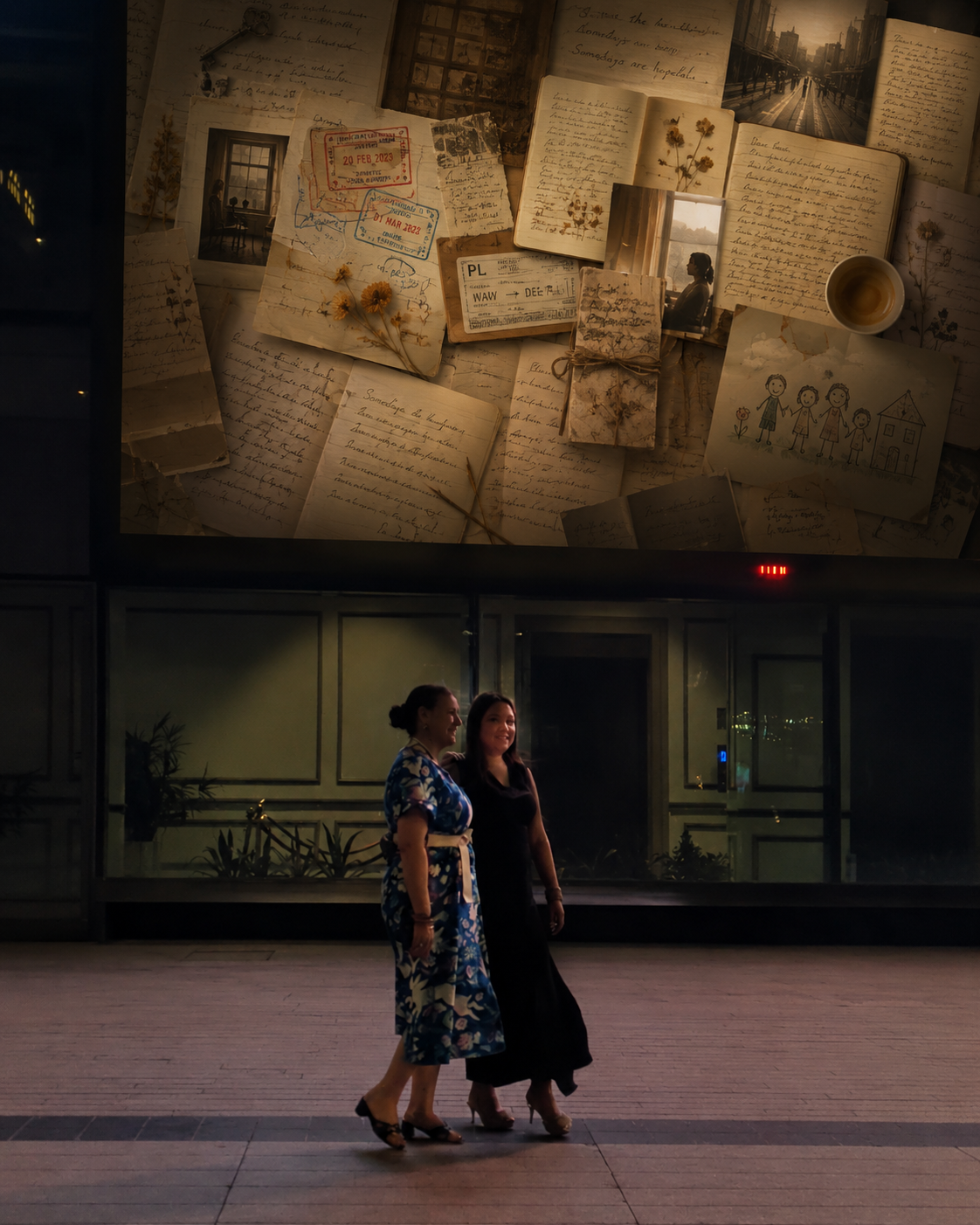
A conversation about someone else’s life led me to an uncomfortable discovery about my own assumptions. A reflection on judgment, hidden circumstances, and the stories we quietly invent about people we think we understand.
A few days ago somebody told me that if they had my life, they would have done far more with it.
A few days later I found myself saying exactly the same thing about somebody else.
A few days ago somebody told me that if they had my life, they would have done far more with it.
A few days later I found myself saying exactly the same thing about somebody else.
Unfortunately for my pride, that is where the story becomes interesting.
A few days ago I had a conversation with someone I know. It was one of those conversations that seem entirely ordinary while they are happening and then, for reasons unknown, decide to move into your head and refuse to leave. Among the many things discussed was a thought about me that, at the time, I accepted with complete calm. The person told me that I know so much, observe so much, write so much, understand so much, and yet if they were in my position they would have done far more with all of it. According to them, I have opportunities, possibilities and experiences that many people never receive, and therefore there are countless things I could be doing that I am not doing.
I remember listening quite peacefully. Everyone is entitled to an opinion, and age has taught me that defending oneself against every opinion is an excellent way to waste an afternoon. The conversation ended, life continued, and the matter seemed settled. Then, a few days later, I found myself sitting with friends discussing somebody else entirely. The person in question appeared, from where I was standing, to possess everything one might need to build something extraordinary. Intelligence was certainly not the problem. Opportunity did not appear to be the problem. Support seemed available. Possibilities appeared endless. Looking at the situation from my comfortable seat on the outside, I heard myself say, with complete sincerity, that I simply did not understand it.
The conversation moved on, as conversations usually do. Somebody changed the subject, somebody ordered another coffee, and life carried on quite happily without asking for my conclusions. Yet the thought lingered. A few days later I found myself confronted by a rather inconvenient realisation. How exactly did I know any of this? How did I know what opportunities truly existed in that person’s life? How did I know what fears occupied their mind at three in the morning when everyone else was asleep? How did I know what responsibilities they carried, what disappointments they had survived, what private battles they fought, what limitations existed behind doors I would never enter?
The answer, dear reader, was painfully simple.
I didn’t.
What I knew was the version of their life visible from my seat, and human beings have a remarkable talent for mistaking what is visible for what is true.
The more I thought about it, the more fascinated I became by what may be one of humanity’s most common habits. We spend an extraordinary amount of time imagining what we would do if we were somebody else, while rarely noticing that we are not imagining their life at all. We are imagining ourselves placed inside a simplified version of their circumstances. We bring our own ambitions, our own fears, our own values, our own personality, our own experiences, and then quietly announce what we would do if we were them. In reality, we are not imagining them at all. We are imagining ourselves wearing their coat for an afternoon.
The truth is that we rarely imagine another person’s life. We imagine our own personality enjoying what we believe are their advantages while conveniently forgetting whatever burdens might accompany them.
The older I become, the more fascinated I am by the confidence with which people distribute possibilities that belong to somebody else. We do it socially, professionally, culturally and personally. We look at a person and see talent and immediately imagine success. We see knowledge and immediately imagine influence. We see opportunity and immediately imagine achievement. We see a person who appears to possess the ingredients and immediately assume the cake should already be in the oven.
There is something almost endearing about this. Society often behaves like a well-meaning aunt at a wedding. The moment she discovers that you possess a talent, she begins organising your future before dessert has even arrived. If you understand education, you should open a school. If you understand cities, you should redesign one. If you understand relationships, you should advise everyone else’s. If you notice social problems, surely you should solve them. By this logic, anyone capable of recognising a leaking roof ought to establish a construction company by next Thursday.
What we rarely see, however, are the quiet negotiations conducted far from the everyday conversations and social media snapshots, beyond the reach of curious eyes and polite conversation. We do not see the weary parent who rises before dawn and retires long after everyone else has gone to sleep. We do not see the persistent anxiety of finances concealed beneath a composed smile. We do not see the fear of failure dressed impeccably and escorted into society as confidence. We do not see the endless paperwork and bureaucratic hurdles that accompany a life lived between countries. We do not see the obligations that cannot be declined, the compromises made without applause, the heartbreaks endured without announcement, or the uncertainties carried with remarkable grace. A thousand delicate details shape a person’s existence, yet somehow never find their way into the version of the story presented to the world.
Perhaps that is why observation has made me less certain rather than more. For every person I meet seems to possess entire chapters hidden from view, and every culture I encounter reminds me how easily familiarity disguises itself as understanding. Living as a Polish woman in India has reinforced this lesson repeatedly. Being an outsider for long enough teaches a person that what appears obvious is often merely familiar. It teaches humility. It teaches patience. Most importantly, it teaches that there is almost always another chapter hidden somewhere behind the one currently being read.
What interests me now is not the comment made about my life, nor even my own assumptions about somebody else’s. What interests me is the strange human habit hiding underneath both. We look at another person’s life and quietly fill in all the blank spaces ourselves. We mistake possibility for opportunity. We mistake awareness for power. We mistake visible circumstances for the entire story. Then, with tremendous confidence, we draw conclusions from information that would barely fill the first page of a novel.
The greatest irony, of course, is that while I was busy reflecting on somebody else’s assumptions about my life, I discovered myself making precisely the same assumptions about somebody else’s. There is something beautifully humbling about being caught by your own observation. One spends several days analysing human nature only to discover oneself standing right in the middle of it.
Human beings are extraordinary creatures. Give us a few facts and we construct an entire story. Give us a glimpse through a window and we imagine the whole house. Give us a chapter and we confidently discuss the ending. Then every now and again, if we are fortunate, life taps us gently on the shoulder and reminds us how little of the story we were actually seeing.
Maybe that is why the older I become, the more I value curiosity over certainty. Curiosity leaves room for missing chapters. Curiosity allows people their mysteries. Curiosity recognises that every life contains rooms we have never entered and conversations we have never heard. Certainty, on the other hand, often arrives rather overdressed and terribly eager to announce conclusions before the story has even unfolded.
Human beings are extraordinary storytellers. Give us a glimpse through a window and we imagine the whole house. Give us a chapter and we confidently discuss the ending.
The older I become, the less interested I am in those imagined endings.
Life has introduced me to too many hidden chapters for that.
And perhaps that is the most useful thing an observer can remember: the story we think we are reading is very rarely the whole book.

 English
  Polish